



Hospitality Management
Program Level:
Degrees, Certificates
Department:
Tourism, Hospitality and Culinary Arts
Institute:
Business & Entrepreneurship
College:
SPC
What is the Hospitality Management program?
The Mission of the Hospitality Management Program is to empower a diverse
student population and provide a robust educational pathway for individuals
seeking management roles in the lodging and food industries. By emphasizing
essential business disciplines including economics and operations management. The program ensures students are prepared for both immediate career entry and seamless transfer to a four-year university. Dedicated to academic excellence, we equip future leaders with the skills needed to pursue higher education and the vibrant San Antonio hospitality sector.
What will I learn?
The competencies needed to be successfully employed in the hospitality management industry.
What can I do with this course of study?
Students earning a degree in Hospitality Management can explore career options across the industry. Opportunities exist in Lodging, Restaurants, Managed Services, Airlines, Cruise Ships, Theme Parks/Attractions, Gaming, Special Events, Car Rental, Rail, and Clubs.
Some of the roles available to the well-prepared graduate include General Manager, Director of Sales and Marketing, Director of Operations, Sales Manager, and Theme Park Manager.
What's special about the program?
The Hospitality Management program prepares students for careers in the visitor and hospitality industries that are vital to the San Antonio and South Texas economy. The industry has grown handsomely in the recent past and is currently the city's second-largest industry. Approximately 39 million people visit San Antonio per year, and the tourism industry has an estimated $21.5 billion impact on the city's economy. View economic impact.
The tourism industry has an estimated $21.5 billion impact on San Antonio's economy.
Where an Associate Degree Takes You
Hospitality has always been an industry that promotes from within, and that is good news for you. Your associate degree opens the door to coordinator and supervisory-track roles right away, and it shortens the climb to management considerably. Where you start depends on the experience you bring with you. Students who work in the industry while they are enrolled often begin a rung or two higher, and we will help you find those opportunities while you study.
Where our graduates begin
Guest Service Agent, Night Auditor, Reservations Agent, Group Rooms Coordinator, Housekeeping Supervisor, Sales Coordinator, Convention Services Coordinator, Banquet Captain, Restaurant Shift Supervisor, Event Coordinator
Career Pathways
Rooms Division and Hotel Operations
Guest Service Agent → Front Desk or Housekeeping Supervisor (1 to 2 years) → Front Office Manager or Executive Housekeeper (2 to 4 years) → Director of Rooms or Assistant General Manager (5 to 8 years) → General Manager (8 to 12 years) → Regional Director of Operations
Food and Beverage
Server, Host, or Line Cook → Shift Supervisor or Banquet Captain (1 to 2 years) → Restaurant, Dining Room, or Banquet Manager (2 to 4 years) → Assistant Director of Food and Beverage (5 to 8 years) → Director of Food and Beverage (8 to 12 years) → Multi-unit Director or Owner-Operator
Sales, Catering, and Events
Sales Coordinator → Convention Services Coordinator (1 to 2 years) → Catering or Event Services Manager (2 to 4 years) → Senior Sales Manager or Director of Catering (5 to 8 years) → Director of Sales and Marketing (8 to 12 years) → Area or Regional Director of Sales
Revenue and Analytics
Night Auditor or Reservations Agent → Revenue Coordinator (1 to 3 years) → Revenue Manager (3 to 6 years) → Director of Revenue Management (7 to 10 years) → Regional Revenue Director
What helps you move faster
Being open to relocating or trying a new property. Brand management-in-training programs with companies like Marriott, Hilton, and Hyatt. Industry certifications such as CHS, CHDM, CMP, and CGSP.
A note from us
These timelines are honest averages, not promises, and plenty of our graduates have moved faster than what you see here. San Antonio is one of the strongest hospitality markets in the country, and the people hiring in it are often the same people who sit on our advisory board and host our practicum students. You will not be job hunting alone.
Continue Toward a Bachelor's Degree
Your associate degree is a complete credential that puts you to work, and it is also a launching point. If you plan to reach General Manager, Director of Sales, or Director of Food and Beverage at a full-service or convention hotel, a bachelor's degree is usually listed as preferred or required. We built this program so that step is already mapped out for you.
Our transfer agreement with UTSA
We have a transfer agreement with The University of Texas at San Antonio that allows students completing the Associate of Applied Science in Hospitality Management to move into UTSA Hospitality and Events Management Program with all 60 of your credit hours applying toward the bachelor's degree. Transferring means applying to UTSA and being admitted, please meet with a St. Philip's advisor in your first semester and we will keep you positioned well for transfering.
More agreements on the way
We are actively developing additional articulation agreements with other four-year hospitality programs in Texas and beyond, and we will post them here as they are finalized. If you have a particular university in mind, come talk to us. We may already be having that conversation, and knowing where our students want to go helps us decide which agreements to pursue next.
You do not have to choose between working and finishing
Most of our transfer students keep working in the industry while they complete the bachelor's, and many have employers who help pay for it. Marriott, Hilton, Hyatt, and several San Antonio properties offer tuition assistance to hourly and salaried associates. Ask us how to find out what your employer offers, or ask before you accept your next position. It is a fair question in an interview and it tells you a lot about the company.
Accredited by the Accreditation Commission for Programs in Hospitality Administration (ACPHA). https://www.acpha-cahm.org/
Program Student Learning Outcomes include:
- Identify and apply the knowledge and skills necessary for hospitality and tourism operations
• Overview of the hospitality industry, guest experience, and the profession
• Operations relative to lodging management
• Operations relative to food service management
• Relationship of tourism to hospitality management
• Field experience - Develop and integrate a core set of business skills necessary to successfully operate a hospitality and tourism organization
• Human resource management relative to business operations
• Marketing of goods and services relative to business operations
• Accounting procedures/practices relative to business operations
• Legal environment relative to business operations
• Economic environment relative to business operations
• Technology relative to business operations
• Organizational theory and foundations of management - Demonstrate competence in the communication skills necessary for hospitality and tourism management
• Written communication skills required for hospitality and tourism management
• Oral communication skills required for hospitality and tourism management
• Interpersonal communication skills required for hospitality and tourism management
• Digital communication skills required for hospitality and tourism management - Formulate business decisions in hospitality and tourism management
• Analytical skills required for hospitality and tourism management
• Critical thinking skills required for hospitality and tourism management
• Problem solving skills required for hospitality and tourism management - Evaluate leadership principles necessary in the diverse and global hospitality and tourism industry
• Leadership skills necessary to effectively manage in the hospitality industry
• Relationship between ethical leadership, culture, and performance
• Exposure to internal and external stakeholders from diverse backgrounds and cultures
Institution: St. Philip's College
Nmae of Program: Hotel, Hospitality, and Restaurant Management
Date Completed: 5/19/2026
| Program Enrollment - Major | 3 years ago 2021-2022 | 2 years ago 2022-2023 | 1 year ago 2023-2024 |
| Number of Students | 47 | 45 | 34 |
| Number of Graduates | 32 | 19 | 30 |
| Student/Faculty Ratio | 9:4:1 | 9:1 | 7:1 |
| Retention Rate % - Freshman to Sophomore (for all Programs) | 55.6% | 22.2% | 54.55% |
| %Students employed in the hospitality industry or a related field i.e. Professional Placement within 90 days after graduation | 56.25% | 50% | 49.7%*** |
| %Students continuing their education within 90 days after graduation | 25% | 50% | 36.1%*** |
| Total Professional Placement and Continuing Education Rate | 81.25% | 100% | 85.8%*** |
| Program | Code | Employed | Additional Education | Both |
| Tourism and Travel Services Management | 52090300 | 78.6% | 21.4% | 100% |
| Hotel/Motel Administration/Management | 52090400 | 50% | 33.3% | 88.3% |
| Hospitality Administration/Management General | 52090100 | 50% | 50% | 100% |
| Restaurant, Culinary, and Catering Management/Manager | 12050400 | 20% | 40% | 60% |
*** Average Percentage for the following:
Program Statistics
Degrees and Certificates
St. Philip's College programs offer the following degree(s) and certificate(s). View our Course Catalog for more information.
Contact Us
|
David Uminski Program Director |
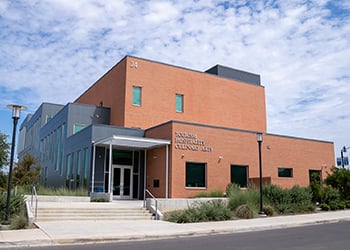
MLK Campus : Tourism, Hospitality and Culinary Arts (THCA) Building, 304 |
|
|
LeAnn Dinsdale Associate Dean-BIS and THCA departments |
MLK Campus : Tourism, Hospitality and Culinary Arts (THCA) Building, 318A |