

The Professor Who Brought Mexican American Studies to Texas
February 17, 2026
At first glance, former San Antonio College history professor Johnny McCain might seem like an unlikely leader in establishing ethnic studies in Texas.
In fact, a 1970 SAC student magazine article about him made that point with the headline “Gringo teaches Mexican American history.”
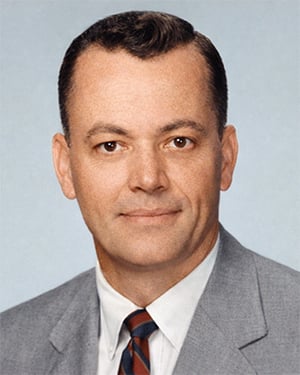 But for McCain, now Professor Emeritus after a career at SAC spanning more than 30 years, advancing Mexican American studies was a personal mission that ultimately impacted higher education throughout Texas.
McCain grew up on a farm in Moore, a small town in Frio County about 40 miles southwest of San Antonio, with a population approximately 60 percent Mexican American. He saw first-hand the challenges facing the community, both as a child and in his first teaching job at a middle school on San Antonio’s Southeast side.
“I had a lot of Mexican American friends,” McCain said. “I knew there was a lot of discrimination and I hoped to be able to eradicate a lot of that.”
McCain’s efforts resulted in the first Mexican American history class at SAC in 1968, a first in Texas and one of the first in the country.
McCain joined SAC as a full-time faculty member in 1963, after four years of teaching night classes while also teaching at Hot Wells Middle School.
After a few years as a professor, he asked his department chair, Truett Chance, if he could teach a Mexican American history class. Chance successfully petitioned the Texas Higher Education Coordinating Board for approval to offer a course on the subject, which McCain designed and taught.
“We found out that we were the only place outside the state of California that was teaching Mexican American history,” McCain said. Other four-year universities in Texas soon followed McCain’s lead.
McCain went on to earn his PhD at the University of Texas at Austin in U.S. and Latin American history, with a focus on Mexico. He became a sought-after guest lecturer on the subject at four-year institutions including UT Austin, St. Mary’s University, Our Lady of the Lake University, and other universities from Laredo to Denver to Houston. He also discussed issues relating to Mexican Americans in the media, including as a guest professor on KLRN-TV’s “Cultures in Conflict” series.
McCain emerged as an ally to Mexican American students during tumultuous times in the 1960s and early 1970s, when a burgeoning Chicano movement was part of a national focus on civil rights. SAC also experienced a surge of student activism.
An article in a June 1970 edition of the local newspaper Chicano Times promoted McCain’s classes while describing him as “a man of depth and understanding who is sincerely interested in the advancement of La Raza” (editor Jose Luis Rodriguez was also a SAC student).
McCain became faculty sponsor of SAC’s chapter of MEChA (Movimiento Estudiantil Chicano de Aztlán), a national student organization that formed on campus in 1970. He held that role until 1975.
“I was welcomed into Mexican American activities, whatever they were,” he said.
As McCain continued to teach U.S. and Mexican American history at SAC, he also became active in improving community college education statewide.
He spent 15 years in leadership roles with the Texas Junior College Teachers Association, working with state legislators and agencies to advance community college priorities. His efforts helped secure state funding for summer session operations and developmental study courses, among other improvements.
He also served on many committees at SAC and the Alamo Colleges District, including six years on the faculty senate, with two terms as chair.
One cause McCain championed was rigorous academic standards, a passion rooted in his own educational experience.
Growing up, McCain was an excellent student. He skipped third grade and graduated at age 16 as valedictorian of his high school class.
It wasn’t until he began classes at Southwest Texas State Teachers College (now known as Texas State University) that he realized that his education had left him woefully underprepared for college.
“That became a driving force for me because I wanted to make sure no one experienced that ever again,” McCain said.
At times, McCain clashed with administrators that he felt preferred more relaxed educational expectations, which created the appearance of higher success rates while shortchanging students.
“I had some conflicts with some administrators at SAC over academic standards,” he recalled.
One way McCain addressed this concern was by producing a 32-page study guide for students. He wrote “How to Pass History by Really Trying,” which focused on developing effective study habits.
While created specifically for his history students, the guide found a wide audience with students in other subjects. Published in 1977, the guide was initially available in the SAC bookstore for 50 cents, just enough to cover printing costs.
A student who had taken a course with McCain in 1992 wrote to him the following year to thank him for “having been thoughtful and caring enough to be such an involved professor.” The study guide “has proven to be an invaluable tool even today,” wrote David Castillo Jr.
McCain gave the library a dozen copies for student use.
“There was such a demand for it the librarians told me ‘you need to give us many more,’” McCain said. “I don’t know when it went out of print. They were still using it when I left (in 1993).”
Another challenge McCain tackled was the lack of standardized faculty pay. He pushed for reform while serving as faculty senate chair from 1971 to 1973.
“We had no prepared plan for salaries – it just depended on the administrator to determine who got how much. There was no system in place,” he said. “The group most adversely affected by that were the females, because they were paid less than the males for the same work.”
McCain urged then-president Dr. Wayland Moody to appoint a committee to study the issue. Moody promised he would bring it up at the next board meeting, taking place July 1973. When the issue was not addressed, McCain stood up at the end of the meeting and reminded Moody of his promise.
The move ruffled the feathers of some board members and administrators, but Moody agreed. He appointed a committee that studied the issue for a few months before proposing a plan that established a fair pay system for all faculty members.
“The women just loved me for it,” McCain said.
While righting wrongs and making things better were constant pursuits throughout McCain’s career at SAC, he continued to make an impact on students in the classroom. He served as chair of the history department from 1976 to 1981, but stepped down to once again make teaching his primary focus. McCain retired from SAC in 1993.
As his former student Castillo wrote him in a letter that year, McCain’s impact was lasting:
“I look back at the time I spent in your classroom and can still remember what you said. Your lectures were always interesting, understandable and presented in a cohesive fashion.
“I am the kind of person that enjoys driving from one place to another and stopping along the way to read the markers of time; your class was such an event. I not only felt that I drove through time, but was able to live it for a moment.
“I thank you for this experience.”
-SAC-