




SPC Represented at Texas Preventing Targeted Violence Conference
March 16, 2026
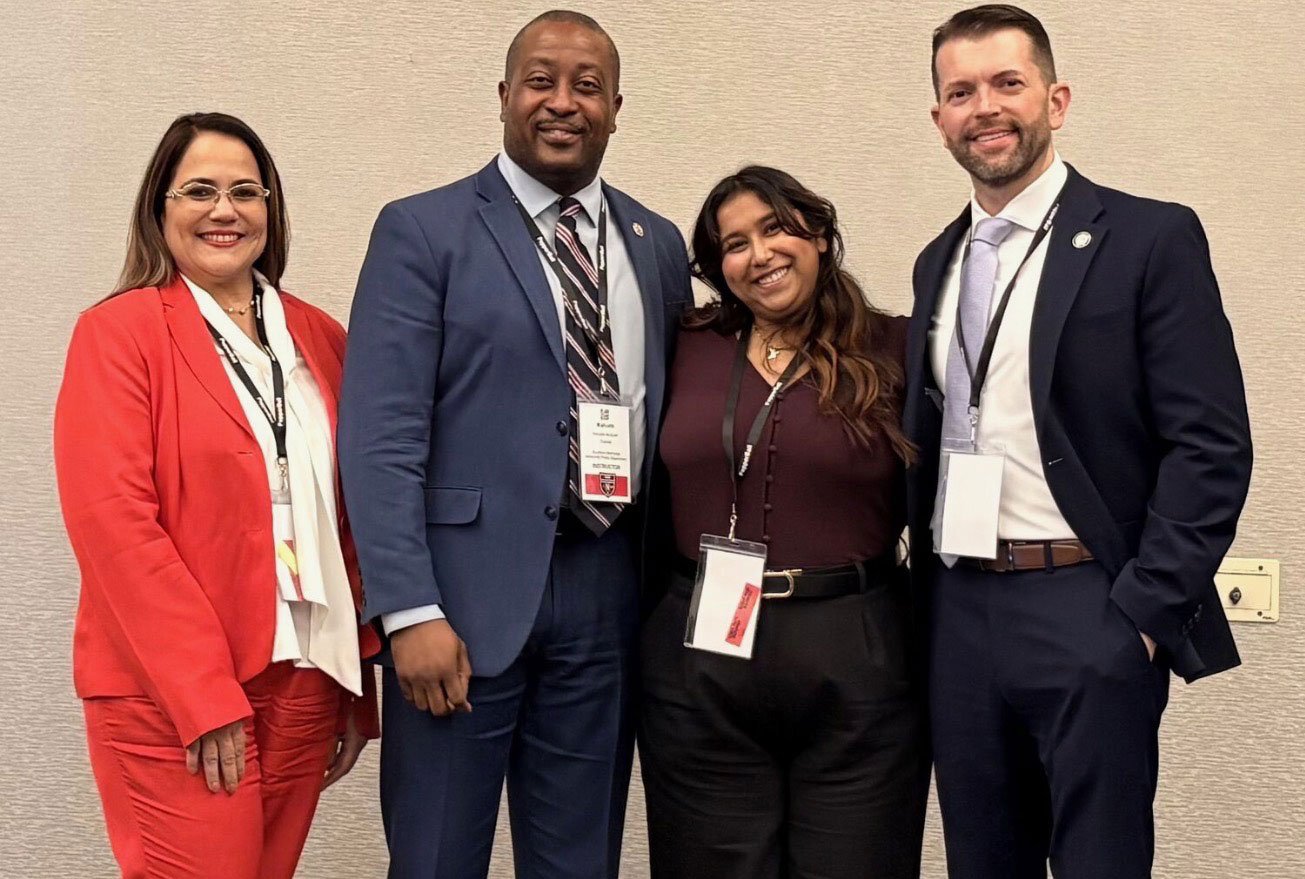
On March 2 – 5, St. Philip’s College (SPC) was represented at the second annual Texas Preventing Targeted Violence Conference, where Dean for Student Success, Educational Support Services Adriael L. Simien-Falduto, and Director of Student Conduct and Title IX Alexandra Rodriguez Figueroa, met with higher education and community leaders from across the state to discuss strategies for identifying and preventing targeted violence.
During the panel, Rodriguez Figueroa discussed how her work in student conduct and Title IX compliance informs her approach to behavioral threat assessment and management through the college’s Strategies of Behavioral Intervention (SOBI) Team.
The discussion highlighted the importance of balancing supportive interventions with accountability and due process when addressing concerns for student behavior. Rodriguez Figueroa shared how early intervention is implemented at SPC, including how quickly staff connect with students of concern and what those initial outreach conversations typically involve. She also discussed challenges related to conflicts fueled by social media and peer escalation, along with strategies that help de-escalate situations and promote resolution.
The conference featured sessions on identifying behavioral indicators associated with targeted violence, strengthening behavioral threat assessment and management teams, and improving collaboration between community partners.
Rodriguez Figueroa said the event provided an opportunity to highlight the college’s ongoing commitment to student safety and well-being while learning from other professionals engaged in prevention work.
“Participating in the conference was a meaningful opportunity to highlight the important work we are doing to support student safety and well‑being at St. Philip’s College. Engaging with colleagues from across the state reinforced the value of collaboration and shared learning in preventing targeted violence. I was honored to contribute to the conversation and to represent our college’s commitment to proactive, student‑centered intervention,” she said.